Closed-Cell Spray Foam Insulation
A dense, rigid, high-R-value spray foam that resists moisture intrusion and adds structural strength, ideal for basement walls, rim joists, roof decks, and other Akron applications where moisture control is the priority.
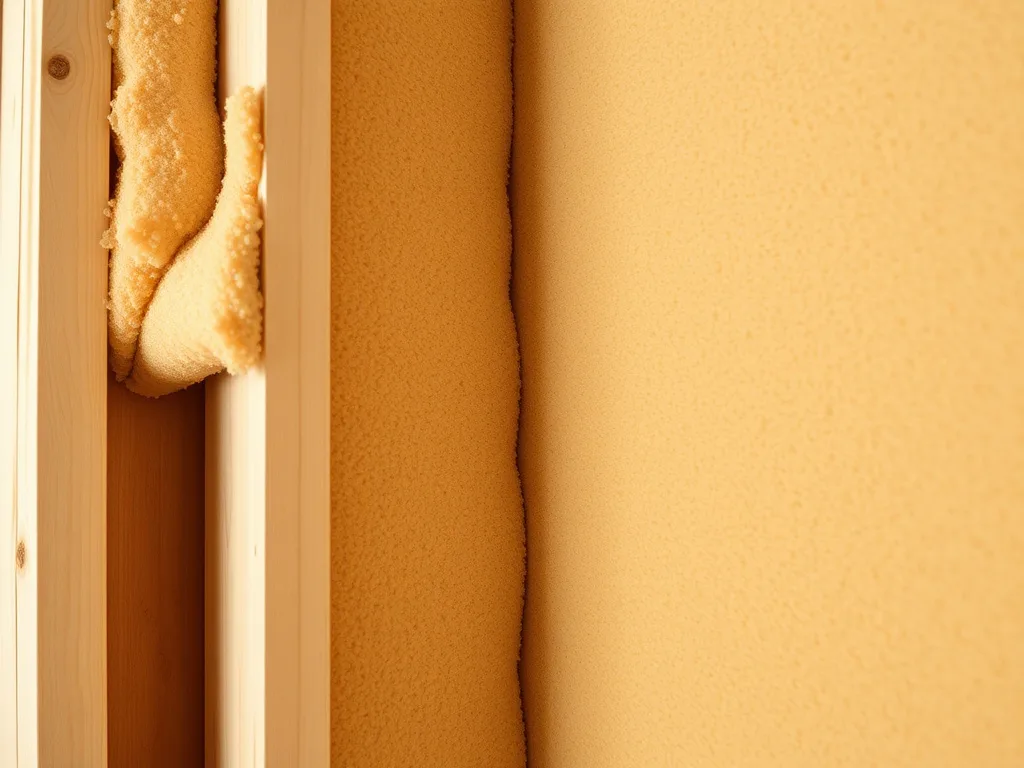
Closed-cell spray foam is a two-pound-density polyurethane foam with a fully sealed cell structure, giving it a typical range of about R-6 to R-7 per inch — roughly double the R-value per inch of open-cell foam — along with meaningful rigidity and resistance to moisture intrusion. That combination makes it the right choice anywhere in an Akron home where space is limited, structural reinforcement is welcome, or moisture exposure is a real concern: basement walls, rim joists, roof decks, and exterior applications where the assembly needs to resist water.
In Summit County's humid continental climate, moisture resistance isn't a nice-to-have, it's core to the job. Freeze-thaw cycling, humid summers, and older housing stock with a documented history of basement dampness and condensation mean closed-cell foam's ability to shed bulk water and slow vapor movement earns its place on the roster, particularly below grade and at rim joists where fiberglass batts routinely fail from moisture exposure over time. Where fiberglass has to be replaced after a basement flood or a chronically damp rim joist, correctly applied closed-cell foam is far more tolerant of the intermittent moisture exposure those areas see over the life of the house.
Why homeowners choose it
- Delivers roughly R-6 to R-7 per inch, the highest R-value per inch of any common insulation material
- Resists moisture intrusion, making it well suited to below-grade and rim joist applications
- Adds real structural rigidity, reinforcing rim joists, roof decks, and stud walls as it cures
- Can function as a vapor barrier when applied at the correct thickness in the right assembly
- Performs well in tight cavities where high R-value per inch of thickness matters most
- Holds its performance over decades without settling, unlike fiberglass batts or loose-fill
Closed-Cell Foam as a Vapor Barrier: Getting the Application Right
One of closed-cell foam's most valuable properties is that, applied at sufficient thickness, it can function as a Class II vapor retarder or vapor barrier — a meaningful advantage in Akron's humid continental climate, where moisture drives can run in more than one direction across the year. But this is also the source of the most common homeowner confusion about spray foam: misapplied in the wrong assembly, any vapor barrier, closed-cell foam included, can trap moisture on the wrong side of a wall or roof system rather than letting it dry out, leading to hidden problems over time.
The fix isn't avoiding closed-cell foam, it's correct application. A licensed, building-science-literate installer accounts for the specific assembly, existing materials, and moisture drive direction before determining thickness and placement. That's a core part of why we walk every closed-cell project through an on-site assessment rather than quoting a generic thickness over the phone — the right closed-cell application resolves moisture concerns, and the wrong one can create them, so getting this step right is where professional experience matters most. This is also where a truck-and-tank operator with minimal training differs most from a licensed, ratio-trained crew: the chemistry and mix ratio are only half the job, correctly reading the assembly is the other half.
Where Closed-Cell Foam Outperforms in Akron Homes
Below-grade basement walls are the clearest case: concrete and block foundation walls are in constant contact with soil moisture, and closed-cell foam's water resistance holds up where fiberglass, which absorbs and holds moisture, degrades and loses R-value over time. Rim joists — the band of framing where the foundation meets the floor framing above — are another priority area, since they're often poorly insulated in Akron's older housing stock and sit right at a major air-leakage and moisture-exposure point. Crawl space walls fall into this same category for the smaller share of Akron-area homes built on that foundation type, and get the same moisture-first, closed-cell treatment.
Roof deck applications for unvented, conditioned attics are a third strong fit, particularly for homes with ductwork or mechanical equipment located in the attic. Closed-cell's rigidity adds real structural value here too, stiffening roof sheathing and rim joists as part of the same application that handles insulation and air-sealing, which is a combination fiberglass simply can't offer.
- Basement walls: resists ground moisture where fiberglass would absorb and degrade
- Rim joists: seals a major, often-overlooked air leakage and moisture-exposure point
- Roof decks: supports unvented, conditioned attic conversions
- Structural add: stiffens sheathing and framing as it cures
- Typical range for basement/rim joist/crawl space: R-15 continuous, or R-19 cavity (sometimes R-13+R-5)
- Correct thickness determined per assembly, not a fixed number applied everywhere
Lender, Appraisal, and Resale Considerations
Some lenders and appraisers scrutinize homes with spray foam insulation, particularly closed-cell foam applied to roof decking, over concerns about structural inspection access or past cases of poor-quality installation causing moisture problems. This is a real, addressable objection rather than something to gloss over: the concern generally traces back to substandard installs, not to correctly applied closed-cell foam itself.
We address this proactively by using licensed, ratio-trained installers, documenting the application, and applying foam according to manufacturer specifications and correct building-science practice for the specific assembly. Homeowners planning to sell or refinance are welcome to ask us about documentation for their specific project during the on-site assessment, and we're glad to speak directly with an appraiser or inspector if questions come up during a transaction.
Ideal for
- Basement walls and rim joists where moisture resistance and R-value per inch both matter
- Homes in flood-prone or historically damp locations needing a moisture-resistant assembly
- Roof deck applications converting a vented attic to an unvented, conditioned space
- Tight cavities where limited depth makes a high R-value per inch essential
- Structures needing added rigidity at rim joists, band boards, or roof sheathing
What affects the cost
Closed-Cell Foam questions, answered
As an industry estimate, closed-cell spray foam typically runs $3.00-$5.00 per square foot installed, reflecting its higher density and R-value per inch compared to open-cell. The final number depends on thickness, square footage, and site conditions, which we confirm during an on-site assessment.
Misapplied in the wrong assembly, any vapor barrier including closed-cell foam can trap moisture on the wrong side of a wall or roof system. Correctly applied by a building-science-literate installer who accounts for the specific assembly and moisture drive direction, closed-cell foam controls moisture rather than trapping it — application detail is what makes the difference.
For basement walls and rim joists specifically, yes in most cases — closed-cell's moisture resistance holds up against ground moisture in a way fiberglass and even open-cell foam don't, and the higher R-value per inch matters in the often-limited cavity depth of a rim joist. We'll compare both options for your specific basement during an assessment.
Some lenders and appraisers do flag spray foam, particularly roof deck applications, over concerns tied to past poor-quality installs. We install to manufacturer spec with licensed, ratio-trained crews and can provide documentation of the application for homeowners navigating a sale, refinance, or appraisal.
A standard 24-72 hour reoccupancy window is typical after professional closed-cell application while the foam fully cures. We review the exact timeline for your project before work begins so you can plan accordingly.
Closed-Cell Foam done right, by a local Akron crew
Closed-Cell Foam isn't a commodity — the result depends entirely on how carefully it's planned and installed for your specific home and Akron's real humid continental climate. We assess what your house actually needs, prep and air-seal properly, and install to your Zone 5A-appropriate R-value target, so the work delivers the comfort and savings it's supposed to.
We serve Akron, Cuyahoga Falls, Stow, Tallmadge, Barberton, Fairlawn, Green, Norton, Hudson, and Kent. Every job starts with a free, no-pressure quote.
Just as important, we treat your home like the system it is. Insulation, air sealing, and moisture management all interact, and getting one right while ignoring the others leaves comfort and savings on the table. When we scope your closed-cell foam, we look at how it fits the whole picture — so the finished result performs the way it should, holds up through a genuine Akron year, and actually lowers the bills you feel every month.
Free assessment
We evaluate your home and give you a clear, itemized quote.
Expert install
We prep, air seal, and install your closed-cell foam to spec — clean and on schedule.
Savings you can feel
A warmer home, lower heating bills, and honest advice about what your home needs.
Related services
Ready for a free closed-cell foam quote?
Tell us about your home and we'll put together a clear, no-pressure spray foam insulation quote — built for Akron's real winters, humid summers, and older housing stock.