Open-Cell Spray Foam Insulation
A lighter-density, more affordable spray foam that expands to fill interior cavities and stop air leakage, well suited to interior walls, attics, and sound-dampening applications across Akron homes.
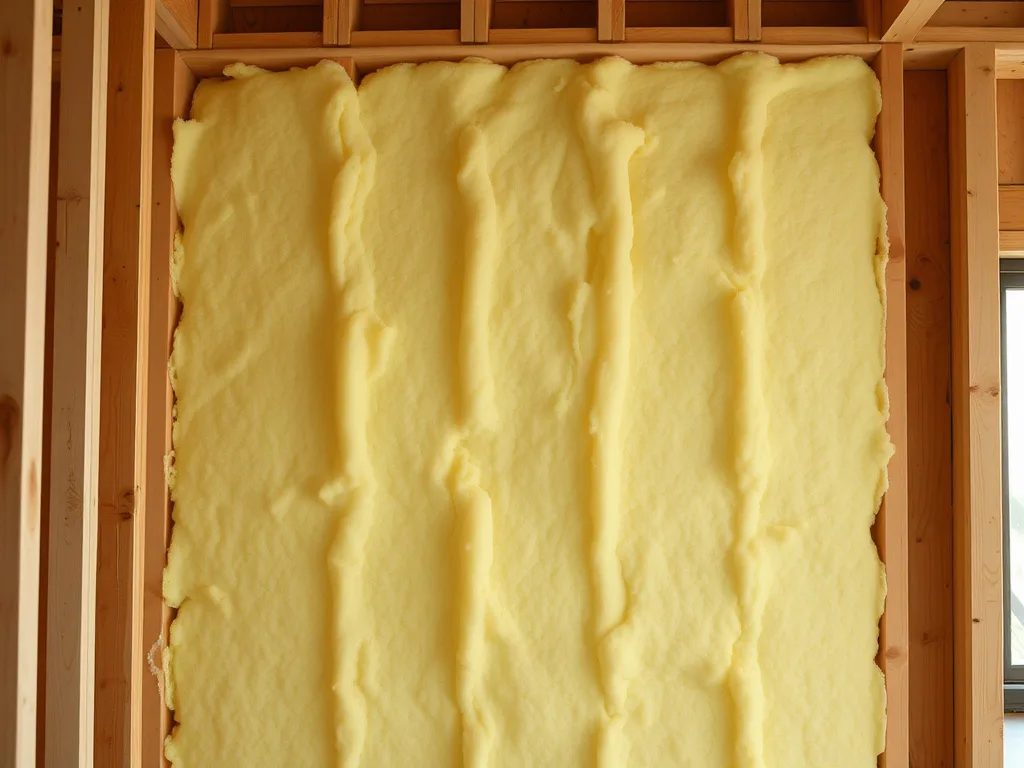
Open-cell spray foam is a half-pound-density polyurethane foam that expands roughly 100 times its liquid volume, filling stud bays, attic floors, and irregular framing cavities completely as it cures. The open cell structure — tiny air pockets that aren't fully sealed off from each other — makes it lighter and more affordable per board foot than closed-cell foam, while still delivering the continuous air-sealing that fiberglass batts and blown cellulose can't match in Akron's leaky, older housing stock.
It's a strong fit for interior applications where vapor permeability is an asset rather than a liability — interior partition walls for sound dampening, cathedral ceilings paired with a proper vapor strategy, and attic floors in vented assemblies. Because it's more affordable than closed-cell, open-cell foam is often the practical choice for homeowners working to a budget who still want real air-sealing performance rather than settling for another round of fiberglass batts. For Akron homes where the goal is stopping drafts and evening out room-to-room temperature swings on a defined budget, open-cell frequently delivers the bulk of the comfort improvement homeowners are after without stretching into closed-cell pricing across every cavity in the house.
Why homeowners choose it
- Expands to fill irregular cavities and gaps completely, stopping air infiltration fiberglass leaves behind
- Costs less per board foot than closed-cell foam while still delivering a continuous air barrier
- Provides strong interior sound dampening between rooms, floors, and against exterior noise
- Vapor-permeable profile allows assemblies to dry to the interior, useful in the right wall or roof design
- Lighter weight than closed-cell, reducing structural loading concerns in some retrofit applications
- Cures quickly, minimizing the reoccupancy window compared to slower-curing alternatives
How Open-Cell Foam Performs in Akron's Humid Continental Climate
Open-cell foam's R-value runs a typical range of roughly R-3.5 to R-3.7 per inch, lower per inch than closed-cell, but that number only tells part of the story. What matters most for an Akron home fighting 6,160 heating degree days a year is the air-sealing performance, and open-cell delivers that regardless of density — it fills a cavity completely and stops the drafts and bypasses that drive most real-world heat loss. Where open-cell needs more thought is vapor management: because it's vapor-permeable, it should be paired with an appropriate vapor retarder strategy on exterior assemblies exposed to Akron's humid summers and freeze-thaw winters, which is a detail we evaluate cavity by cavity rather than applying a one-size answer.
That distinction matters more here than it would in a drier climate. Akron's combination of humid summers and cold winters means moisture can move through a wall or roof assembly in both directions over the course of a year. Used correctly — typically on interior applications or exterior assemblies designed with the right vapor strategy — open-cell performs well. Used carelessly in the wrong assembly, any insulation type can contribute to trapped moisture, which is why the assembly design matters as much as the foam choice itself. We look at the specific wall or roof construction, existing sheathing type, and interior finish plans before recommending open-cell for an exterior application, rather than treating it as a default across every cavity in the house.
Open-Cell vs. Closed-Cell: Making the Right Call
The open-cell versus closed-cell decision comes down to where the foam is going and what job it needs to do. Open-cell is the more economical, sound-dampening, vapor-permeable option; closed-cell is denser, adds structural rigidity, resists moisture intrusion, and can function as a vapor barrier in the right assembly. Neither is universally 'better' — they're tools suited to different parts of the same house, and many Akron projects use both: closed-cell at rim joists and basement walls where moisture resistance matters most, open-cell at interior partitions and vented attic floors where cost efficiency and sound control matter more.
We walk every homeowner through this tradeoff during the on-site assessment rather than defaulting to one foam type across the whole project. Cost, the specific cavity, moisture exposure, and whether the space will be conditioned all factor into the recommendation, and we'll explain the reasoning behind each choice rather than treating it as a preset package.
- Open-cell: R-3.5-3.7 per inch, typically $1.50-$3.50 per sq ft installed
- Closed-cell: R-6-7 per inch, typically $3.00-$5.00 per sq ft installed
- Open-cell excels at sound dampening between interior spaces
- Closed-cell adds rigidity and moisture resistance in basements and rim joists
- Many projects blend both foam types by location within the same house
- Assembly design and vapor strategy matter as much as the R-value per inch
Professional Installation and Cure Process
Open-cell foam is a two-component chemical product mixed on-site through calibrated proportioning equipment, sprayed by a licensed, ratio-trained crew who monitor temperature, humidity, and mix ratio throughout the job. Getting that ratio right is what determines whether the foam cures properly, fully off-gasses, and performs at its rated R-value — it's also exactly what separates a professional install from a DIY spray foam kit, where inconsistent hand-mixing is a common cause of failed foam, lingering odor, and no real recourse if something goes wrong.
After a professional application, homeowners should plan on a standard 24-72 hour reoccupancy window while the foam fully cures and any residual odor clears. We walk clients through that timeline before the job starts so there are no surprises, and we're glad to explain the mixing and cure process in more detail during your on-site assessment if you're weighing spray foam against a DIY approach.
Ideal for
- Interior partition walls where sound dampening between rooms or floors matters
- Vented attic floors in homes not pursuing an unvented, conditioned-attic conversion
- Budget-conscious homeowners who still want real air-sealing performance over fiberglass
- Additions and finished spaces where irregular framing makes batt insulation difficult to fit well
- Homes where vapor permeability is the right call for the specific wall or roof assembly design
What affects the cost
Open-Cell Foam questions, answered
As an industry estimate, open-cell spray foam typically runs $1.50-$3.50 per square foot installed, with the overall project cost depending on square footage, cavity depth, and site conditions. We'll give you an accurate number based on your specific space during an on-site assessment.
It can be, when paired with the right vapor management strategy for the assembly — Akron's humid summers and freeze-thaw winters mean moisture can move through a wall in both directions over a year, so the assembly design matters as much as the foam type. We evaluate this cavity by cavity rather than defaulting to one answer.
Open-cell foam's dense, fully-filled cavity structure dampens sound transmission between rooms and floors noticeably better than fiberglass batts, which leave gaps and don't adhere to framing the same way. It's a common upgrade for home offices, media rooms, and shared walls between living spaces.
DIY kits are prone to bad mix ratios without professional proportioning equipment, which can lead to foam that doesn't fully expand or cure, continuing odor, and no real recourse if the application fails. A licensed, ratio-trained installer controls those variables with equipment and training a kit can't replicate.
Some lenders and appraisers flag spray foam applications, particularly at roof decks, over structural or moisture concerns tied to poor past installations. Correctly applied open-cell foam in an appropriate assembly, documented by a professional installer, generally addresses those concerns — we're happy to discuss documentation for resale or refinance situations.
Open-Cell Foam done right, by a local Akron crew
Open-Cell Foam isn't a commodity — the result depends entirely on how carefully it's planned and installed for your specific home and Akron's real humid continental climate. We assess what your house actually needs, prep and air-seal properly, and install to your Zone 5A-appropriate R-value target, so the work delivers the comfort and savings it's supposed to.
We serve Akron, Cuyahoga Falls, Stow, Tallmadge, Barberton, Fairlawn, Green, Norton, Hudson, and Kent. Every job starts with a free, no-pressure quote.
Just as important, we treat your home like the system it is. Insulation, air sealing, and moisture management all interact, and getting one right while ignoring the others leaves comfort and savings on the table. When we scope your open-cell foam, we look at how it fits the whole picture — so the finished result performs the way it should, holds up through a genuine Akron year, and actually lowers the bills you feel every month.
Free assessment
We evaluate your home and give you a clear, itemized quote.
Expert install
We prep, air seal, and install your open-cell foam to spec — clean and on schedule.
Savings you can feel
A warmer home, lower heating bills, and honest advice about what your home needs.
Related services
Ready for a free open-cell foam quote?
Tell us about your home and we'll put together a clear, no-pressure spray foam insulation quote — built for Akron's real winters, humid summers, and older housing stock.