Garage Spray Foam Insulation
Spray foam applied to garage walls, ceilings, and doors to reduce winter cold, control humidity and condensation, and stop attached garages from dragging down comfort in the rest of the house.
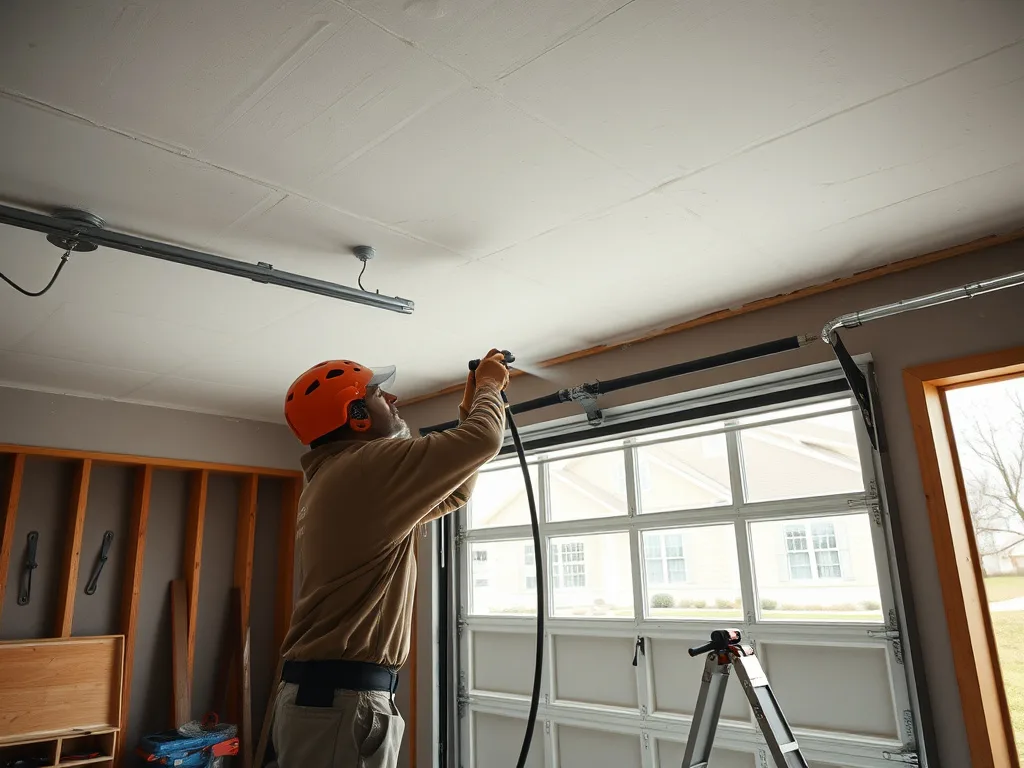
Garages, especially attached garages, are frequently the most under-insulated space in an Akron home, treated as an afterthought during original construction even though they share walls and often a ceiling with conditioned living space. In a climate averaging 35°F January highs and 19°F lows, an uninsulated attached garage doesn't just leave the garage itself cold — it acts as a thermal drain on adjacent rooms, and any door or wall shared with the house becomes a significant, often overlooked source of heat loss.
Spray foam insulation addresses garage walls, ceilings, and the header areas around garage doors with the same continuous air-sealing approach used elsewhere in the house, closing the gaps that make garages consistently the coldest, draftiest part of a home. For homeowners using the garage as a workshop, home gym, or general living space rather than pure vehicle storage, spray foam is often the difference between a genuinely usable year-round space and one that's avoided from November through March. It's also a comparatively contained project — most garages are open-stud or easy to access without disturbing the rest of the house, which keeps the scope, timeline, and disruption smaller than a comparable retrofit elsewhere in a finished home.
Why homeowners choose it
- Reduces heat loss through garage walls and ceilings shared with conditioned living space
- Cuts drafts through the garage that carry cold air into adjacent rooms of the house
- Helps control condensation and humidity swings common in unheated garages during Akron winters
- Makes attached workshops, home gyms, or hobby spaces usable through more of the year
- Adds sound dampening between the garage and adjoining living space
- Reduces strain on HVAC equipment located in or near an uninsulated garage
Attached Garages: Stopping the Thermal Drain on Living Space
An uninsulated attached garage functions as a large, cold buffer zone directly against conditioned rooms, and the shared wall or ceiling assembly is frequently thinner and more leak-prone than exterior walls elsewhere in the house — builders have historically treated the garage-to-house wall as an interior partition rather than an exterior-grade assembly, even though one side sits at outdoor temperature for much of the winter. Rooms above an attached garage are a particularly common cold-spot complaint in Akron homes, since the garage ceiling is essentially an uninsulated floor for the room above it.
Spray foam applied to the garage side of that shared wall and ceiling assembly closes the gap, bringing the thermal and air-sealing performance of the garage-facing surfaces closer to what an actual exterior wall would deliver. This is one of the more straightforward, high-impact upgrades available for homes with a persistent cold room over or beside the garage, and it's often quicker and less disruptive than homeowners expect, since the garage side of the assembly is usually already open or easy to access without touching finished surfaces in the room above.
Garage Doors, Headers, and Air-Sealing Details
Garage door openings are large, imperfectly sealed penetrations in an exterior wall, and the framing around the header and jambs is a common leakage point independent of the door itself. While spray foam doesn't replace a properly weatherstripped, insulated garage door, foam applied to the surrounding header, jamb, and rim areas closes the framing gaps that a door alone can't address, and pairs well with a door upgrade if one is planned.
We also address other common garage air-leakage points during the same visit where relevant — service door headers, wall penetrations for wiring or plumbing, and the top plate where the garage wall meets roof framing above.
- Shared walls and ceilings with living space treated as priority areas
- Garage door header and jamb framing sealed alongside wall cavities
- Service door and wall penetrations addressed during the same visit
- Top plate connections to roof framing checked for air leakage
- Mechanical equipment areas prioritized where present
- Foam choice (open-cell or closed-cell) matched to the specific cavity and moisture exposure
Condensation and Humidity in Unheated Garages
Unheated or semi-heated garages in Akron's humid continental climate see real seasonal condensation, particularly where a cold concrete slab and metal garage door meet warm, humid air during summer, or where warm interior wall surfaces meet cold garage-side surfaces in winter. Left unmanaged, that condensation contributes to rust on tools and equipment, musty odors, and, over time, conditions favorable to mold on framing or drywall.
Air-sealing the garage envelope with spray foam reduces the uncontrolled air exchange that drives much of this condensation risk, particularly at the shared wall and ceiling assemblies with the house. For garages being converted to a more fully conditioned workshop or gym space, we can discuss additional humidity-control approaches alongside the insulation work during the on-site assessment. This matters most for homeowners storing tools, equipment, or vehicles they care about, since rust and corrosion from repeated condensation cycles tend to show up gradually over several winters rather than all at once, making it an easy problem to underestimate until real damage has occurred.
Ideal for
- Attached garages sharing a wall or ceiling with conditioned living space
- Garages used as a workshop, home gym, or hobby space beyond basic vehicle storage
- Homes with a bedroom, office, or living room directly above or beside the garage
- Garages housing a furnace, water heater, or other mechanical equipment sensitive to cold
- Detached garages being converted to a heated or semi-conditioned workspace
What affects the cost
Garage Insulation questions, answered
A room above an attached garage sits directly over what's essentially an uninsulated floor if the garage ceiling was never properly insulated and air-sealed, which is a very common gap in Akron-area construction. Spray foam applied to the garage ceiling assembly typically resolves this by closing that thermal and air gap.
Yes, if it's an attached garage — the shared wall and ceiling with your living space affects your home's overall heating performance regardless of how the garage itself is used. Detached garages used purely for vehicle storage are a lower priority unless you're planning to condition the space.
Air-sealing the garage envelope reduces the uncontrolled air exchange that drives much of the seasonal condensation Akron garages see, which in turn helps limit rust and musty conditions. It works alongside good ventilation practices rather than replacing them entirely.
Pricing follows the same general framework as wall insulation elsewhere in the house — typically within the broader $1.50-$5.00 per square foot industry range depending on foam type — scaled to your garage's square footage and specific priority areas. We'll quote your garage specifically during an on-site assessment.
We insulate the framing around the garage door header and jambs as part of the air-sealing scope, but the door panel itself is a separate product; if your door isn't insulated or weatherstripped well, we can discuss that alongside the spray foam work during your assessment.
Garage Insulation done right, by a local Akron crew
Garage Insulation isn't a commodity — the result depends entirely on how carefully it's planned and installed for your specific home and Akron's real humid continental climate. We assess what your house actually needs, prep and air-seal properly, and install to your Zone 5A-appropriate R-value target, so the work delivers the comfort and savings it's supposed to.
We serve Akron, Cuyahoga Falls, Stow, Tallmadge, Barberton, Fairlawn, Green, Norton, Hudson, and Kent. Every job starts with a free, no-pressure quote.
Just as important, we treat your home like the system it is. Insulation, air sealing, and moisture management all interact, and getting one right while ignoring the others leaves comfort and savings on the table. When we scope your garage insulation, we look at how it fits the whole picture — so the finished result performs the way it should, holds up through a genuine Akron year, and actually lowers the bills you feel every month.
Free assessment
We evaluate your home and give you a clear, itemized quote.
Expert install
We prep, air seal, and install your garage insulation to spec — clean and on schedule.
Savings you can feel
A warmer home, lower heating bills, and honest advice about what your home needs.
Related services
Ready for a free garage insulation quote?
Tell us about your home and we'll put together a clear, no-pressure spray foam insulation quote — built for Akron's real winters, humid summers, and older housing stock.